












- Home
- Port Verdict
- LEGO: The Turnaround That Was Mostly…
LEGO: The Turnaround That Was Mostly Subtraction
LEGO recovered by removing almost everything it had added, then earning the right to add again.
LEGO's recovery is told as a story of creativity, which is almost the opposite of what happened. By the early 2000s the company was in serious trouble after years of diversification away from the brick. The turnaround was built on cutting, simplifying and returning to the core. Our verdict: PASS, with a warning about the old mistake returning.
The docking
The situation at the start of the 2000s was genuinely bad. LEGO had expanded into theme parks, clothing, media, software, lifestyle products and a long list of play systems with little to do with the interlocking brick. The catalogue had swollen, with thousands of component shapes in production, many specific to a single set.
Each decision had a plausible internal justification. Children were moving to video games, so build software. Toy retail was consolidating, so create owned destinations. Licensing was lucrative, so extend the trademark. The brand was strong, so stretch it.
The cumulative effect was a company with enormous complexity, weak margins and a diluted identity. LEGO reported substantial losses in the early 2000s, with 2003 and 2004 widely reported as the worst of it. The cause was not a lack of ideas. It was too many of them.
This is the most common failure we see in established brands. Success creates confidence, confidence funds adjacency, adjacency consumes the attention and capital that made the core strong, and the core weakens while everyone looks at the new divisions. It is why most of our brand strategy work begins by asking what a business should stop doing.
The manoeuvre
Jørgen Vig Knudstorp became chief executive in 2004 and the response was unsentimental.
The company sold a controlling stake in its theme park business, exiting a capital intensive category it was not built to run. Non core lines closed. The component library was dramatically reduced, which lowered cost and, counterintuitively, improved design discipline. Supply chain and distribution were restructured. Product development changed to bring children and adult fans in earlier.
Licensing was retained but focused, with partnerships like Star Wars treated as expressions of the brick system rather than departures from it. The distinction matters. A licensed set is still a building experience. A licensed t-shirt is not.
Then, from a restored core, the company expanded again along a different axis. Rather than leaving the brick to enter new categories, it took the brick to new audiences: the adult fan market with architectural and collector sets, girls as an explicitly addressed audience, digital products that drove people back to physical building, and eventually film. The LEGO Movie in 2014 succeeded because it was about bricks rather than merely branded with them.
That is the sequencing lesson. Focus first, extend second, and extend from the core rather than away from it.
What worked
Reducing the element library was the most elegant decision in the programme. It cut manufacturing and inventory cost, forced designers to solve problems within a shared system, and restored the fundamental promise that any piece works with any other. One operational decision repaired both the balance sheet and the brand proposition.
Exiting theme parks was correct and difficult. Owned destinations are seductive to brand leaders because they feel like the ultimate expression of the brand. They are also real estate businesses with real estate economics, and LEGO was a plastics and design business. Knowing which business you are actually in is unglamorous and decisive.
Bringing adult fans into the process converted a community LEGO had treated as an oddity into a development asset and a marketing channel. The collector sets that followed carry higher margins and generate the kind of content no creative direction budget can manufacture, because enthusiasts make it for free and other enthusiasts believe it.
And the film worked because the product was the subject. Audiences have reliable instincts about whether entertainment exists to tell a story or to move units. LEGO got away with a feature length commercial by making it genuinely good and genuinely about building.
What did not
The turnaround has a cost that is rarely named. LEGO today sells a great many sets with detailed, fixed instructions and a high proportion of specialised pieces, aimed at producing one specific finished model. That is a different philosophy from the open bucket of generic bricks, and it has drawn sustained criticism from parents and long time fans who argue the brand now sells assembly rather than creativity.
That goes to the heart of the brand's claim. If the promise is open ended imagination and the product is a sequence of numbered bags with a booklet, there is a gap between what the brand says and what the box does.
Licensing is, quietly, the second version of the original mistake. A large share of growth now depends on other people's intellectual property. That is profitable and it is also rented relevance. When a franchise cools, the sets cool with it, and the brand becomes partly a function of someone else's release schedule.
Price is a further issue. LEGO sits at a premium that increasingly limits it to higher income households, which conflicts with a story about universal childhood play. The collector market, while lucrative, also pulls attention towards adults with disposable income and away from the four year old who was the original user.
The verdict
PASS, firmly, on the strength of the decision making rather than the outcome alone.
What LEGO demonstrates is that a brand in crisis almost never needs a new idea. It needs the idea it already had, underneath everything it bolted on. The turnaround was subtraction: fewer elements, fewer categories, fewer businesses, fewer things the brand was asked to mean. Growth came afterwards, from taking the restored core to new people rather than the name to new products.
We still issue a PASS because the criticisms are symptoms of success rather than drift. A brand arguing with its most devoted fans about the balance between instruction and imagination still has devoted fans and a recognisable philosophy to argue about. That is a better problem than the one it had in 2004.
The warning stands. Licence dependence and premium creep are slow dilutions that only become visible in a downturn. LEGO's own history is the clearest evidence of what happens when a strong brand stops asking whether its growth comes from its core or its edges.
What a UAE brand should take from this
- Audit what you have added, not what you could add. List every product, service and side venture from the last five years and ask which strengthened the core offer. Close the ones that did not.
- Simplify the system, not just the message. LEGO cut parts, not slogans. Reducing operational complexity improves margin and clarity at the same time, which marketing alone cannot do.
- Extend to new audiences before new categories. Taking your existing strength to a new segment is far safer than taking your name into a business you do not understand. Plan it as a campaign management problem, not a diversification one.
- Treat your enthusiasts as a department. Your most committed customers will test, critique and promote your work for the cost of being listened to. Build a formal route for that.
- Watch borrowed relevance. If a meaningful share of your appeal comes from someone else's brand, franchise or platform, know what percentage it is and have a plan for the day it fades. Own assets through brand identity that work without the licence.
Port Verdict also runs on our India desk at oldportindia.com. The rest of the series is in the Port Verdict archive, and if your brand has quietly accumulated more lines of business than it can explain, that is a conversation worth having.
Port Verdict is independent editorial commentary on publicly reported campaigns. Old Port Solutions has no affiliation with the brands analysed.
Keep reading

Pepsi: A Cultural Misread, Pulled Within Days
Port Verdict on the Pepsi 2017 advert that was withdrawn: how a brand misread a cultural moment, and…
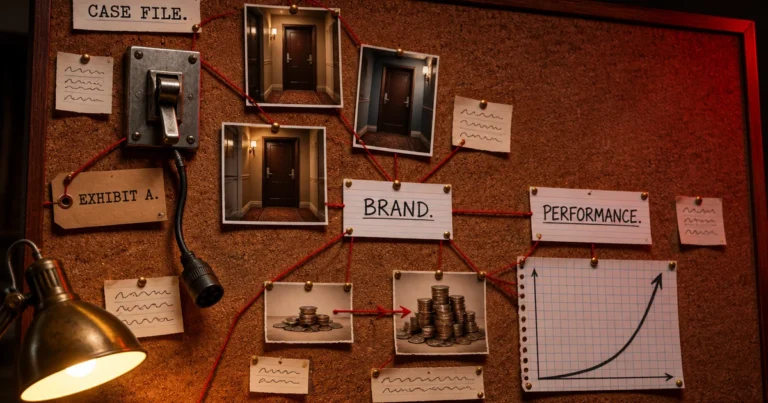
Airbnb: Turning Off the Performance Tap in Public
Port Verdict on Airbnb's publicly stated shift from performance marketing to brand: what the evidence supports, and why…

Nokia: The Cost of Defending the Wrong Asset
Port Verdict on Nokia's decline: how the world's most dominant phone brand defended the wrong asset and lost…